

2025-05-07
Learn More
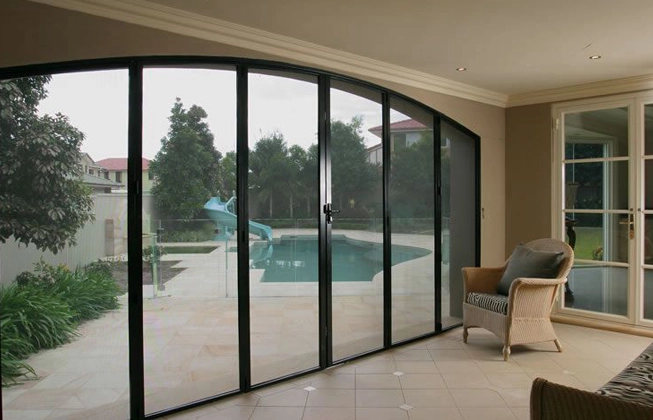
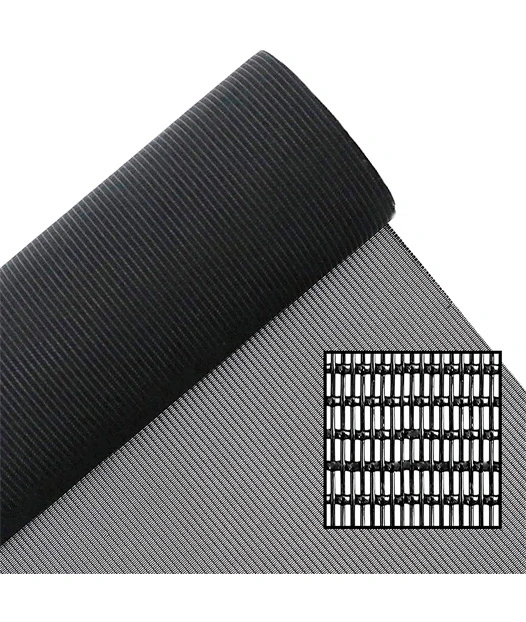
Solar screens are woven shading materials installed over windows, doors, façades, patios, or roller systems to reduce solar heat, glare, and ultraviolet exposure while preserving daylight and outward visibility. Unlike solid blackout coverings, a solar screen uses a controlled open weave to manage how much sunlight passes through. For distributors, blind manufacturers, contractors, and commercial project buyers, the key selection factors are material, openness factor, color, installation position, dimensional stability, and required fire or weather performance.
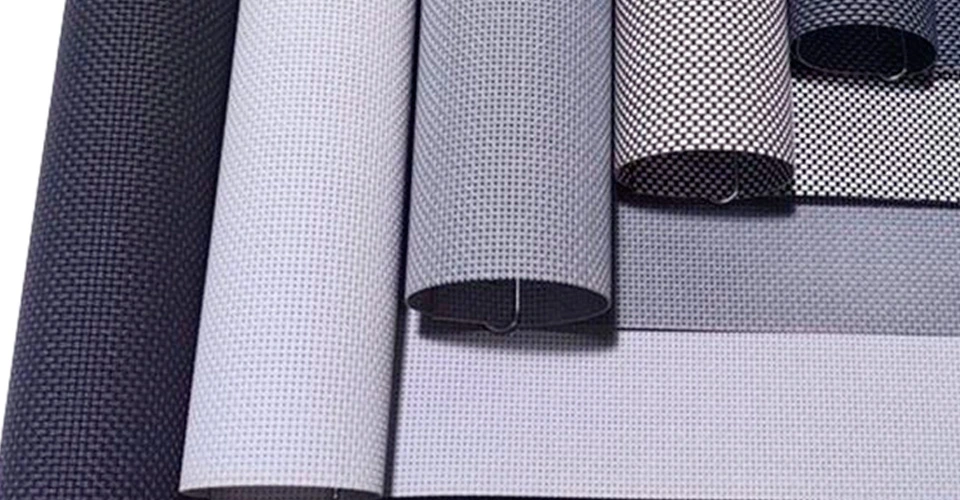
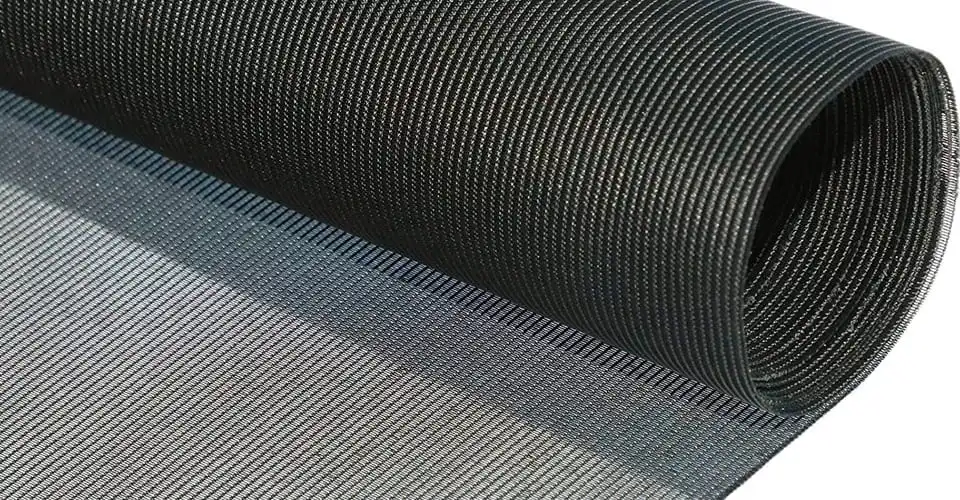
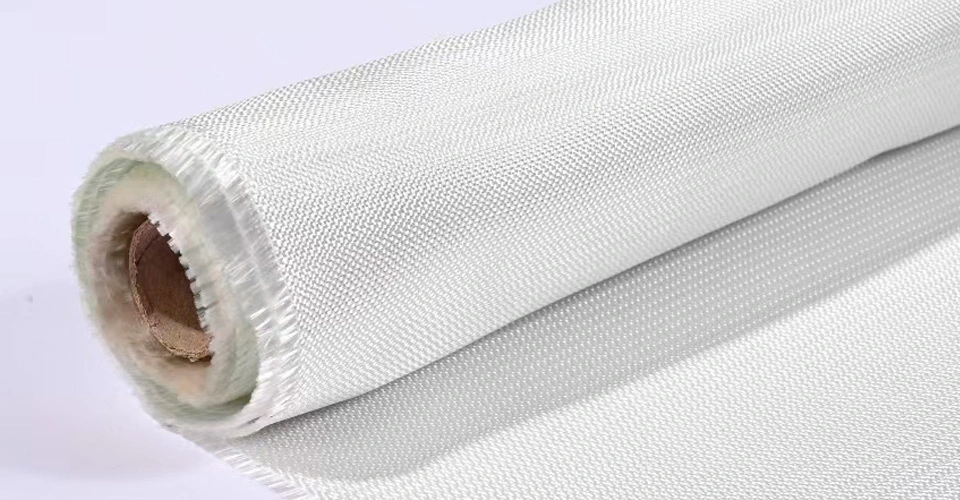
A solar screen is typically produced from polyester or fiberglass yarn coated with polyvinyl chloride, commonly written as PVC. The coating stabilizes the yarn, improves resistance to moisture and abrasion, and provides consistent color and surface performance.
Two common constructions are:
Polyester + PVC: Generally thicker and flexible, making it suitable for roller shades, outdoor shading, and general architectural applications.
Fiberglass + PVC: Valued for dimensional stability and consistent flatness, especially where fabric must remain stable across wide windows or during repeated roller operation.
Material alone does not determine quality. Yarn diameter, weave structure, fabric weight, coating consistency, and heat-setting affect whether the screen rolls evenly, resists edge curl, and maintains its dimensions after heat exposure. JWFG manufactures and supplies high-quality solar screen fabrics, also known as sunscreen fabrics, for roller blinds, commercial windows, patios, pergolas, pool enclosures, and other indoor and outdoor solar-control applications.
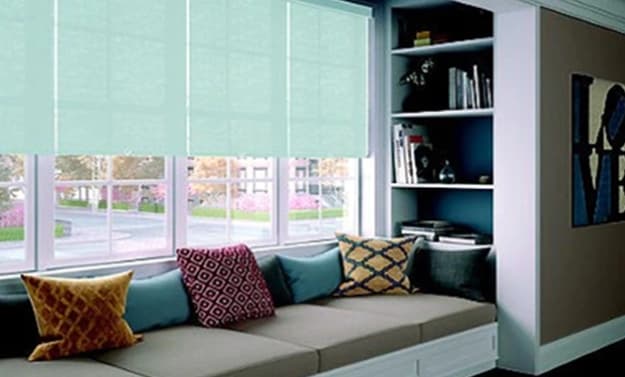
Solar screens work by reflecting, absorbing, and transmitting portions of incoming sunlight. The balance depends mainly on openness factor, color, yarn construction, and whether the screen is installed inside or outside the glazing. The openness factor is the percentage of open space in the woven fabric. A lower percentage means a denser weave. Dense screens usually provide stronger glare control, privacy, and shading, while more open fabrics allow better outward visibility and daylight. According to the technical guidance on interior solar screen performance, openness factor and fabric color jointly influence solar heat reduction, glare control, daylight transmission, and outward visibility.
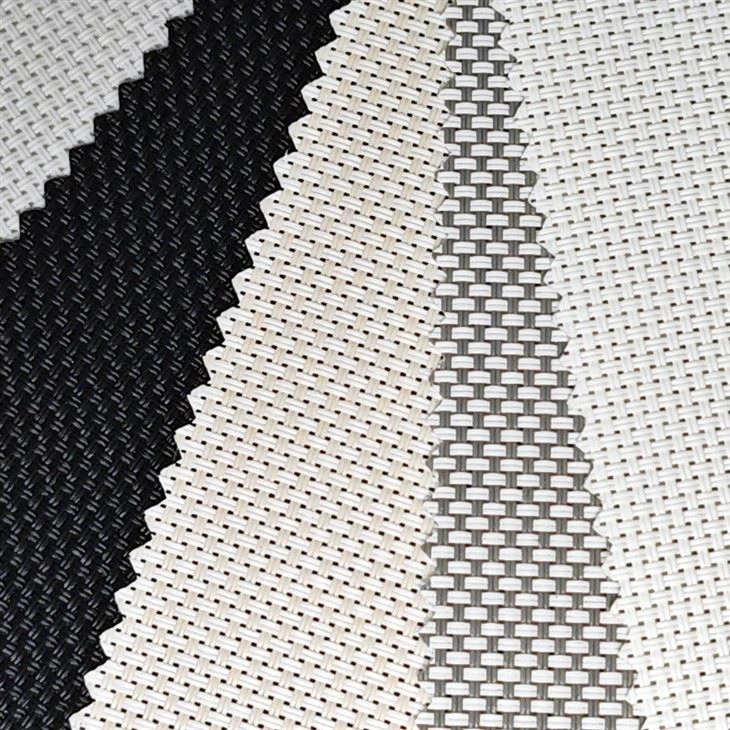
Color also affects practical performance. Dark fabrics often provide clearer outward views and effective glare control because the eye focuses less on the mesh. Lighter fabrics may reflect more visible light, but they can appear brighter from the interior and reduce view-through clarity. Installation position matters. Exterior solar screens intercept sunlight before it passes through the glass, so they can be more effective at limiting solar heat gain. Interior screens remain useful for glare control, privacy, and daylight management, but some absorbed heat has already entered through the glazing. According to the U.S. Department of Energy’s guidance on window attachments for solar control and energy efficiency, exterior solar screens can reduce solar heat gain and glare while maintaining outward visibility because they intercept sunlight before it reaches the glazing.
Solar screens should therefore be selected as part of the full window system. Window orientation, local climate, glass specification, shading time, and indoor comfort targets all affect the result.
Solar screens are often compared with insect screens, blackout fabric, and conventional blind fabric. These products may look similar in a sample book, but their primary functions differ.
| Product Type | Main Purpose | Daylight and View | Heat/Glare Control | Typical B2B Applications |
|---|---|---|---|---|
| Solar screen fabric | Manage sunlight, heat, glare, and privacy | Adjustable through openness factor | Moderate to high | Offices, hotels, schools, façades, patios, roller blinds |
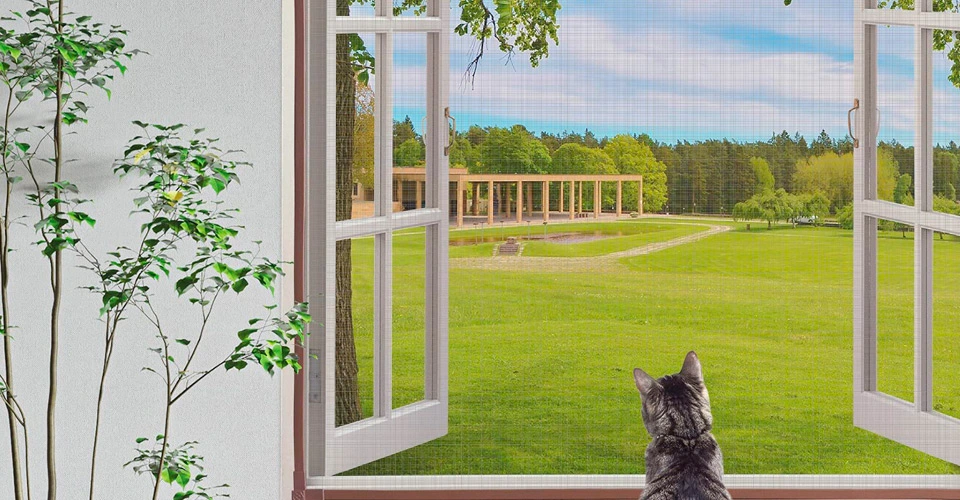
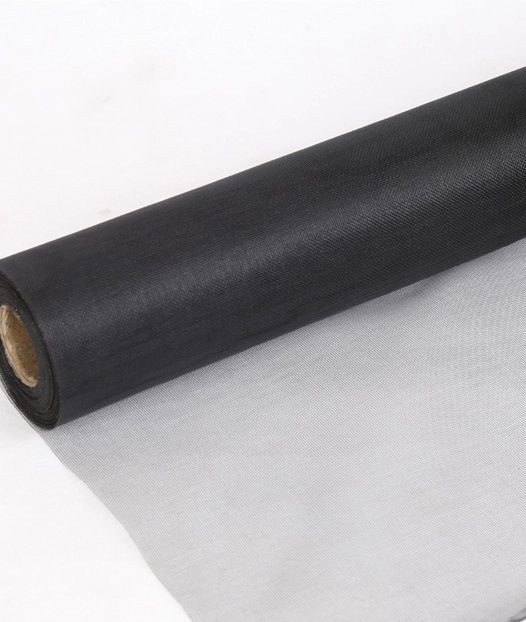
| Fiberglass insect screen | Block insects while maintaining airflow | High visibility and ventilation | Limited unless specially designed | Windows, doors, residential projects, enclosures |
| Blackout fabric | Block visible light and increase privacy | Very low or none when closed | Strong light blocking | Bedrooms, cinemas, meeting rooms, hospitality |
| Decorative blind fabric | Provide privacy and interior styling | Depends on fabric structure | Variable | Homes, retail spaces, offices, fit-outs |
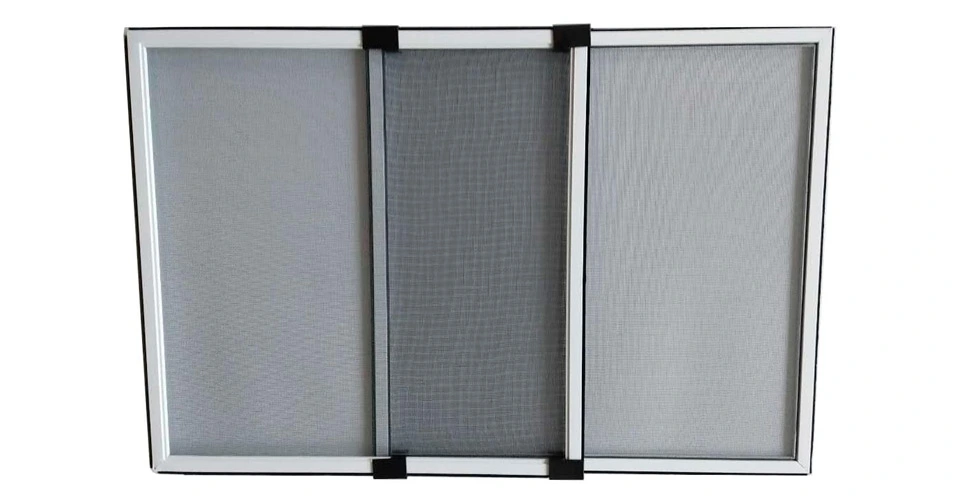
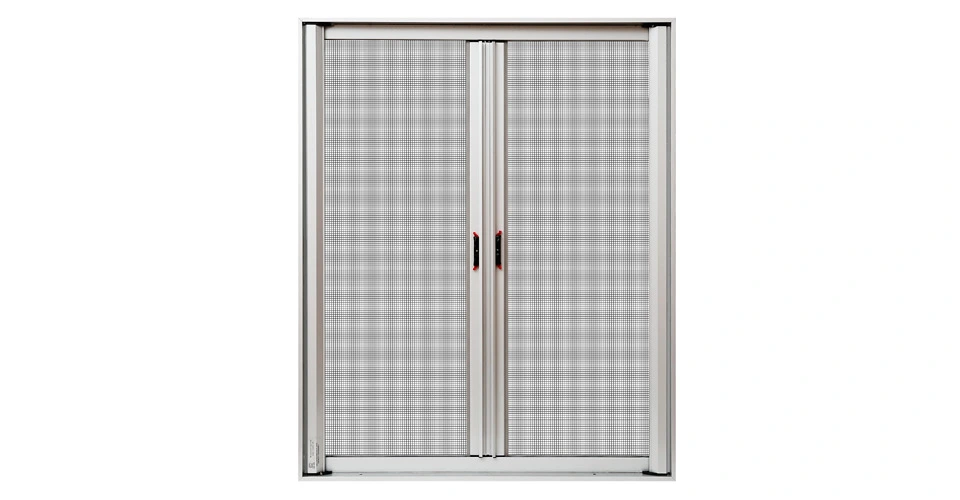
A project may use more than one product. For example, an exterior solar screen can reduce afternoon heat, while a sliding window mesh supports ventilation and insect protection when the window is open. Buyers planning complete systems can review JWFG's custom blinds for windows and doors alongside its shading and screen materials.
The best solar screen is not automatically the fabric with the lowest openness factor. A specification should balance solar control, visibility, mechanical performance, appearance, installation conditions, and budget.
Use this purchasing checklist before requesting samples or quotations:
Define the installation location. Confirm indoor or outdoor use, fixed-frame or roller installation, and exposure to wind, rain, or repeated operation.
Choose the openness factor. Lower openness supports stronger shading and privacy; higher openness supports daylight and outward visibility.
Confirm material construction. Compare polyester-PVC and fiberglass-PVC according to roll width, dimensional stability, flexibility, and system design.
Specify color. Color influences view, glare, reflection, exterior appearance, and coordination with frames or façades.
Provide dimensions and tolerances. State roll width, roll length, cut size, edge treatment, and acceptable variation.
List performance requirements. These may include UV resistance, flame-retardant performance, mildew resistance, tensile strength, or color fastness.
Request representative samples. Review samples against the actual window at different times of day; a small swatch under office lighting cannot fully show glare or visibility.
Clarify packaging and labeling. Importers should specify roll cores, protective film, carton markings, barcodes, and pallet requirements.
Check repeat-order consistency. Ask how color, openness, width, and coating are controlled between production batches.
Discuss OEM support early. Custom color, width, branding, and packaging may affect minimum order quantity and lead time.
Solar-control fabric should not automatically be expected to provide insect, dust, or airborne-particle filtration. Where a project also requires allergy or dust management, buyers should specify a separate pollen screen for windows and evaluate its airflow, filtration efficiency, mesh construction, and cleaning requirements. For buyers sourcing several screen categories, JWFG's window screen application solutions show materials used in construction, homes, offices, shopping malls, patios, and other environments.
No. Most solar screens filter sunlight rather than eliminate it. Openness, color, and weave determine how much daylight and view remain. Projects requiring near-total light blockage should evaluate blackout fabric instead.
There is no universal best percentage. Lower openness is generally selected for stronger glare reduction and privacy, while higher openness provides a clearer view and more daylight. Window direction, climate, glass type, and room use should guide the choice.
Exterior screens can provide stronger solar heat control because they intercept radiation before it passes through the glass. Interior screens are better protected from weather and can still manage glare, privacy, and daylight effectively.
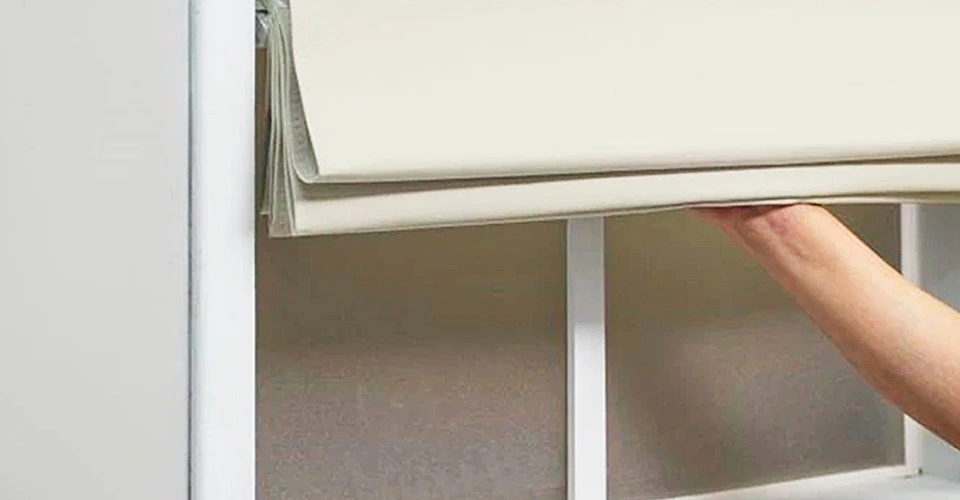
Yes. Solar screen fabrics are widely used in manual and motorized roller blinds. The supplier should confirm fabric flatness, roll width, edge behavior, dimensional stability, and compatibility with the selected tube and operating system.
Include material preference, openness factor, color, roll dimensions, estimated quantity, installation type, performance requirements, packaging, destination market, and any certification or private-label needs.
Mount the sample against the intended glazing and inspect it in direct sun, shade, and interior lighting. Compare glare, outward visibility, privacy, fabric color, surface reflection, and comfort. For large projects, a full-size mock-up is more reliable than a small swatch.
A well-specified solar screen can improve visual comfort, reduce glare, protect interior finishes, and support solar-control goals without completely closing off daylight or outside views. The right result depends on matching the fabric to the window orientation, installation system, openness requirement, and operating environment. For wholesale distribution, roller blind production, architectural shading, or project procurement, contact us to request material specifications, sample options, a bulk quotation, or OEM packaging support. Providing the required width, openness factor, color, application, and order volume will help the supplier recommend a suitable construction and prepare an accurate proposal.
Pacific Northwest National Laboratory – Window Attachments for Solar Control and Energy Efficiency
Efficient Window Coverings – Interior Solar Screen